
Eastside Charleston Investment Property for First-Time Buyers
If you are eyeing Charleston’s Eastside for your first investment, you are probably asking the right question for the right reason: is the opportunity real, or does the complexity outweigh it? Eastside can be compelling for buyers who want a small-scale rental, a historic renovation, or a value-add property on the peninsula. But it is also a neighborhood where zoning, historic review, parking, and flood-related considerations can shape the outcome as much as the purchase price. Let’s dive in.
Eastside, historically known as Hampstead Village, is an older peninsula neighborhood on the Charleston Neck with a mix of housing types and a long-established urban fabric. According to the City of Charleston, it is bounded by Mary Street, Huger Street, East Bay Street, and Meeting Street, and parts of the neighborhood fall under different review environments depending on the parcel location. That matters because Eastside is not one uniform investment zone. You need to evaluate each property on its own merits and approvals path.
For many first-time investors, that can actually be part of the appeal. Instead of competing only for large, standardized assets, you may find smaller, one-off opportunities that reward careful due diligence. In Eastside, that often means older houses, duplexes, and flexible-use residential properties rather than large apartment buildings.
The visible market points to a neighborhood shaped by small-scale housing stock. Current platform data shows a limited number of duplex and triplex listings alongside a modest pool of rental houses, which suggests a mixed inventory of single-family homes and small multifamily properties rather than institutional product. For a first investment, that often creates a more hands-on decision process.
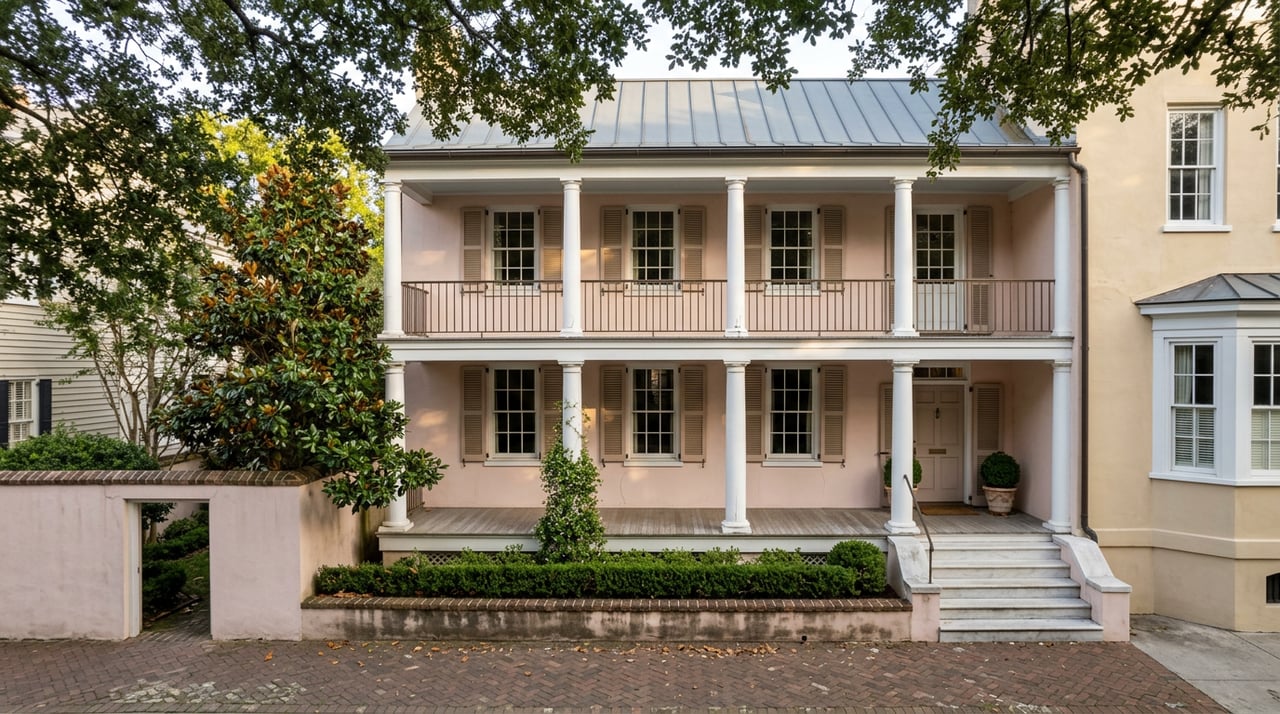
Recent listing patterns also suggest that renovation is often the value-add story here. Older homes and duplexes are frequently marketed around updated kitchens, preserved wood floors, off-street parking, and historic architectural details. That does not mean every deal is a renovation opportunity worth pursuing, but it does suggest that many Eastside investments are won or lost in the rehab plan.
For many buyers, Eastside’s location on the Charleston peninsula is the main draw. A peninsula address can support strong interest from renters who want access to downtown Charleston, and that location can help support long-term demand for well-positioned properties.
Because Eastside includes older houses, duplexes, and mixed-form residential properties, it may offer investment formats that feel more approachable than a larger commercial asset. If you are buying your first rental, a smaller property can be easier to understand operationally, even if the renovation and compliance side requires care.
If you are comfortable evaluating older homes, Eastside may present opportunities to improve asset quality through thoughtful updates. Features like parking, preserved historic details, and modernized interiors appear to matter in current listing language, which can shape both rental appeal and future resale positioning.
One of the biggest mistakes a first investor can make in Eastside is assuming neighborhood-wide rules apply the same way to every property. The City of Charleston notes that the southern portion up to Line Street sits within the Old City district and is subject to Board of Architectural Review oversight, while the northern portion is outside the historic district but still in an overlay zone. That means your buy-box should include property-specific zoning and review research before you commit.
Charleston’s planning documents are clear that resilience is a major issue across the peninsula. The city’s Charleston Water Plan outlines planning around tides, sea-level rise, storm surge, groundwater, and stormwater, and the city’s stormwater standards affect how construction and redevelopment are reviewed. In practical terms, site work, drainage, and exterior improvements should be treated as real investment costs.
Older properties can bring charm and upside, but they can also bring hidden costs. If your business plan depends on major exterior changes, additions, demolition, or visible renovations, review requirements may affect both budget and timeline. For a first-time investor, this is where conservative underwriting matters most.
If a property is within a historic review area, the Board of Architectural Review can be a major part of your process. The city states that the BAR reviews new construction, alterations, and renovations visible from the public right-of-way within historic districts. It also reviews certain demolition requests, especially for older buildings and those within the Old and Historic District.
Some lower-impact items may qualify for staff review, including painting, repairs, signage, and sitework. Even so, first-time investors should not assume that a straightforward renovation on paper will move the same way through Charleston approvals. In Eastside, your scope of work and the exact location of the parcel can change the process significantly.
Rental data in Eastside shows a wide spread, which tells you something important right away: quality and configuration matter a lot. PadMapper’s April 12, 2026 snapshot for East Side, based on 23 listings, shows median rents of $1,775 for studios, $2,775 for one-bedrooms, $3,050 for two-bedrooms, and $4,000 for three-bedrooms. Realtor.com reports a neighborhood median rent of $2.1K with 118 rentals available, while Zillow’s house-rental search shows two-bedroom houses from $3,400 to $5,800, three-bedroom houses at $3,400 and up, and a four-bedroom house at $5,800.
These numbers do not line up perfectly, and that is the point. They are best used as directional ranges, not plug-and-play underwriting figures. In Eastside, bedroom count alone may not tell the full story because parking, renovation quality, property type, and historic character can all influence rent.
For most first-time investors, the answer is simple: do not assume short-term rental use will work unless you verify it first. Charleston’s current short-term rental rules are detailed and procedural. According to the city’s residential short-term rental application materials, a property cannot be advertised or operated until zoning review, Fire Marshal review, fees, a Certificate of Operation, and a business license are complete.
The same city materials state that only one STR unit is allowed per property, the owner must live at the property at least 183 days per year for a residential STR, the property must qualify for the 4% Legal Residence exemption, and at least one additional off-street parking space is required beyond the parking needed for the main residence. The permit must also be renewed annually.
Eligibility can also depend on whether the building is individually listed on the National Register of Historic Places or is at least 50 years old, depending on the category. In Eastside, that means STR feasibility is a parcel-level question, not a neighborhood assumption.
If you are considering Eastside for your first purchase, the strongest strategy is often the least speculative one. Instead of banking on a fast approval, easy parking solution, or automatic STR conversion, focus on a property with a clearer path to stable long-term use.
A practical Eastside buy-box may include:
That approach may feel less exciting than a high-upside projection, but it is often more durable for a first-time investor.
Eastside may be right for your first investment if you want a small-scale property on the peninsula, you understand that older housing stock requires more diligence, and you are prepared for a process that is more hands-on than average. It can also be a fit if you value location and are comfortable taking a measured, compliance-aware approach to renovation.
Eastside may be a less comfortable fit if your plan depends on minimal maintenance, easy entitlement assumptions, or a short-term rental model that has not been fully verified. This is a neighborhood where details matter, and careful planning tends to outperform aggressive guessing.
If you want help evaluating whether a specific Eastside property matches your investment goals, Anna Gruenloh offers the kind of local, parcel-aware guidance that can help you move with more clarity and confidence.
Stay up to date on the latest real estate trends.


Anna prides herself in knowing not only the properties that are available on the market but also the people that live and work in Charleston. Anna has a knack for quickly understanding her clients’ bottom-line needs and guiding them toward the home or investment property that will best suit them.