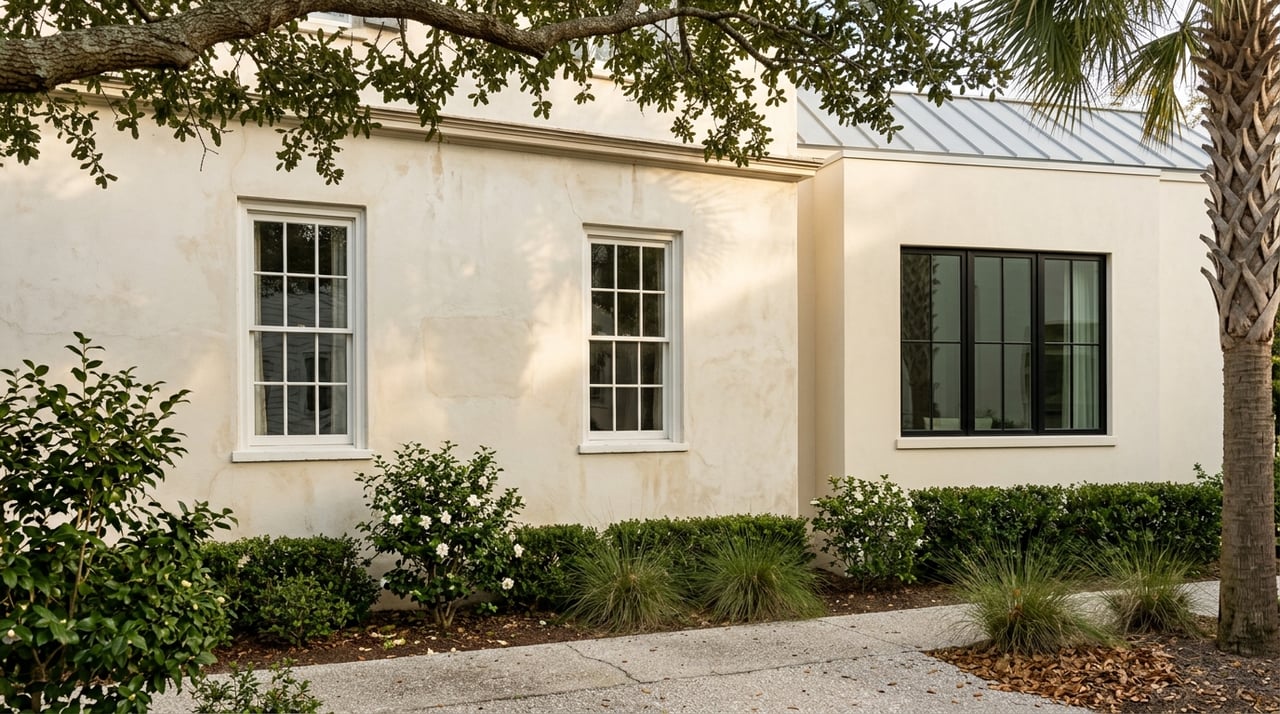
Renovated Or Value-Add? Choosing Your Eastside Strategy
Wondering whether to buy a polished, move-in-ready home or take on a project in East Central or the East Side? On Charleston’s peninsula, that choice is rarely simple. Prices, permitting, flood rules, and even the exact block can shape your outcome, so it helps to understand what you are really buying before you commit. Let’s dive in.
East Central and the East Side sit close together, but they often serve different buyer goals. In broad terms, East Central tends to be the lower-entry peninsula submarket, while the East Side more often commands finished-product pricing.
Recent market snapshots put the East Side around an $824,000 to $837,000 median listing price, while East Central is around $497,450. For context, Charleston citywide averaged about $596,033 in home value and $568,667 in median sale price. That gap helps explain why your strategy matters so much here.
The East Side is also one of Charleston’s oldest and most historically significant districts, historically known as Hampstead Village. That history adds character and long-term appeal, but it can also add review layers and renovation complexity depending on the property address.
A common mistake is assuming "renovated" means expensive and "value-add" means affordable. On the peninsula, that is not always true. You are often paying for location, lot utility, parking, layout potential, and future upside, even if the house still needs work.
In the East Side, current inventory has ranged from a fully updated 1852 two-bedroom at $429,900 to renovated and newer homes priced well above $800,000, with some modern and mixed-use properties climbing far higher. East Central shows a similar spread, from entry-level options in the low $400,000s to fixer opportunities and newer construction priced much higher.
The takeaway is simple: condition alone does not determine price. On the Eastside, a project home can still carry a premium if it offers scarce land, multiple units, or strong future use potential.
If you value certainty, speed, and a more predictable budget, a renovated home may be the better fit. That is especially true if you are relocating, buying a second home, or want to enjoy the peninsula lifestyle without managing a construction process.
Move-in-ready homes can help you avoid some of the biggest unknowns that come with older housing stock. You are less likely to face permit delays, contractor coordination, or surprise foundation and elevation costs after closing.
This approach can also be appealing because Eastside and East Central homes tend to move more selectively than the city as a whole. Charleston citywide homes go pending in about 26 days, while East Side market snapshots have shown much longer timelines, including 86 days on market in one recent report. In slower, more selective submarkets, buyers often pay a premium for homes that feel complete and easy to underwrite.
A value-add property can make sense if you have patience, reserves, and a clear end goal. On the Eastside, that might mean improving a primary home over time, creating a better long-term hold, or buying into a location where finished inventory is limited.
The key is knowing that value-add does not automatically mean a bargain. You may still pay a substantial purchase price before renovation begins, especially if the property has a strong address, useful lot, parking, multiple units, or other hard-to-find features.
Value-add can be attractive when you want more control over design, layout, and finish level. It may also open doors to opportunities that feel harder to find in fully renovated inventory.
On the peninsula, renovation timelines often stretch for reasons that have little to do with paint colors or countertops. Charleston’s floodplain rules and historic review process can materially affect cost, scope, and timing.
The City of Charleston states that all properties in Charleston are in a flood zone, though not all are in the FEMA Special Flood Hazard Area. In the Special Flood Hazard Area, a building permit is required for all development.
The city also notes that if reconstruction, rehabilitation, additions, or other improvements reach 50 percent of a structure’s assessed or appraised value, the building must meet current floodplain requirements. Depending on the property, that can trigger much larger decisions around elevation, design, and feasibility than many buyers expect at first glance.
Charleston also requires elevation certificates and applies higher flood-design standards, including Coastal A Zone rules and freeboard requirements. For a buyer comparing renovated versus value-add, these are core underwriting issues, not minor technical details.
Historic review is another major reason a promising project can slow down. The Board of Architectural Review reviews new construction, alterations, and renovations visible from the public right-of-way within historic districts.
It also reviews certain demolitions, and city materials indicate that East Side and Hampstead Village are partly in the Old City District and partly in an overlay zone. In practical terms, whether review applies can come down to the exact address.
The board meets monthly, applications are due by noon on the deadline, and submissions are capped. If a packet is incomplete, your project can lose valuable time.
For buyers, that means a value-add opportunity needs more than a good vision. It needs a realistic timeline tied to local review requirements.
If you are considering an older home with recent updates or an in-progress renovation, documentation matters. Charleston County warns that unpermitted work can create legal complications and leave the homeowner responsible for fines or retroactive permits.
That risk is especially important in neighborhoods where older homes, additions, and phased improvements are common. A home that looks cosmetically updated may still deserve a close review of permits, inspections, and contractor scope.
South Carolina also requires an active license or registration for residential building, specialty contracting, or home-inspecting work. For you as a buyer, that makes contractor vetting part of the decision, not an afterthought.
A smart Eastside strategy starts with better questions. Before choosing renovated or value-add, make sure you understand the property’s constraints, carrying costs, and likely path forward.
If you want speed, predictability, and a cleaner path to enjoying the peninsula, renovated is often the stronger choice. You may pay more upfront, but you are also buying time, reduced complexity, and greater clarity.
If you have reserves, patience, and a well-defined plan, value-add can still be compelling. Just remember that on the Eastside, the land, location, and future potential can keep prices high even when the property still needs substantial work.
The best choice usually comes down to your timeline, risk tolerance, and how hands-on you want to be after closing. In a micro-market like East Central and the East Side, the strongest strategy is rarely generic. It is address-specific, numbers-driven, and shaped by local knowledge.
If you are weighing a renovated home against a project on the peninsula, Anna Gruenloh can help you compare the real tradeoffs, evaluate block-by-block opportunities, and build a strategy that fits your goals.
Stay up to date on the latest real estate trends.

Anna prides herself in knowing not only the properties that are available on the market but also the people that live and work in Charleston. Anna has a knack for quickly understanding her clients’ bottom-line needs and guiding them toward the home or investment property that will best suit them.