What Folly Beach’s Short-Term Rental Cap Ruling Means
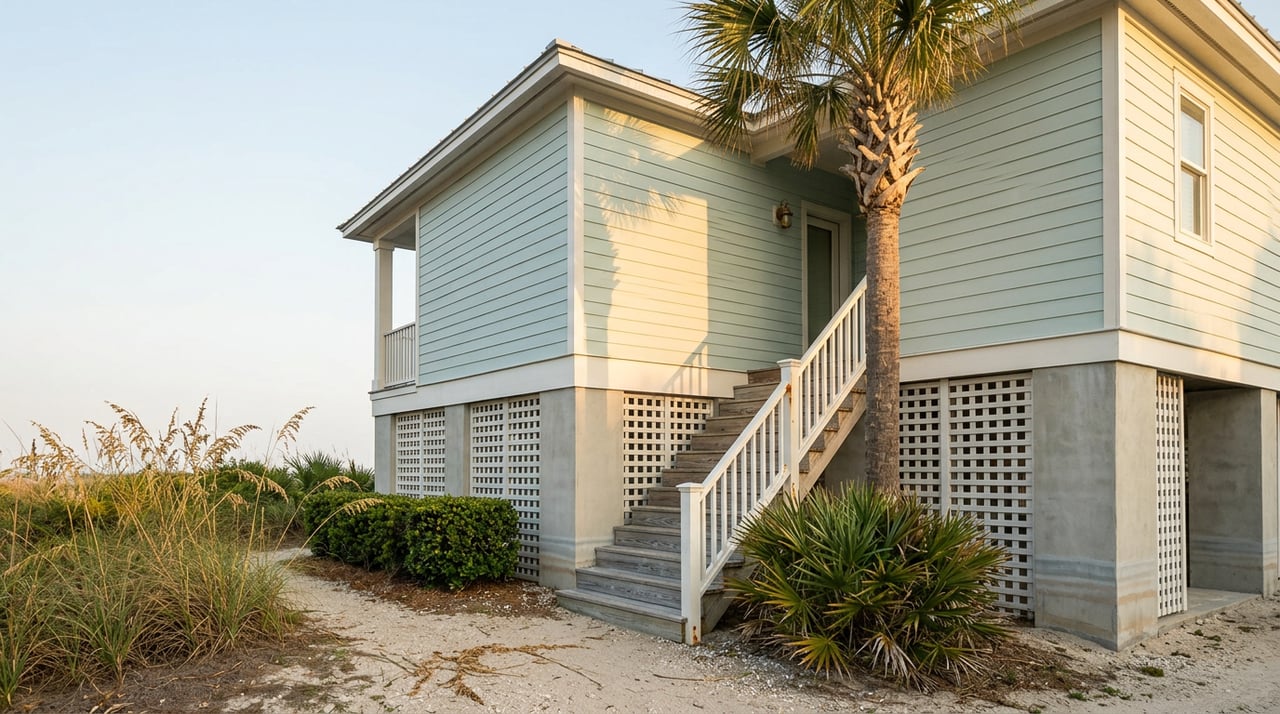
A buyer considering a raised cottage on East Arctic Avenue this month should distinguish a home's short-term rental history from the rules for continuing to rent it. Live 5 News reported that the court struck down the city's cap on rental licenses and that the city paused most new license issuance in the back half of August, but the Post and Courier reports that most investor licenses do not transfer at sale.
For buyers, the key question is whether a rental license will transfer or a new one can be issued.
How the license system actually works
According to the Post and Courier, Folly Beach has capped the number of non-owner-occupied short-term rental licenses at 800 since February 2023. Voters approved that number in a referendum, and at the time there were 1,125 rental properties on the island, accounting for 43 percent of its housing stock. The cap didn't touch owner-occupied rentals, which are restricted to 72 rental days a year, as the Post and Courier has reported.
The detail that trips up buyers is what happens to a license when a house changes hands. The ordinance made investor licenses non-transferable, with a short list of exceptions carved out over time for inheritance and medical hardship. Buy a house with an active rental history from someone who isn't your parent, and in most cases that license lapses at the closing table. Under the current moratorium, new entries to the waitlist are frozen.
That waitlist has been a slow-moving line for years. According to the Post and Courier, when the cap took effect, 926 license holders were grandfathered in, which is 126 more than the 800-license target. That means 126 existing licenses had to lapse before a single new one could be issued, before anyone even got to the roughly 200 entries sitting on the waitlist behind them. As of the most recent count reported by the Post and Courier, nobody had moved off that list.
The ruling that sounded like the end of the cap
On August 14, 2026, Ninth Judicial Circuit Judge Thomas J. Rode struck down both the 800-license cap and the rental registration fee that funded it. The suit was filed in 2024 by Park Lane Partners LLC and property owner Elizabeth Spratt Cooper. According to Book with Haven, the fee was calculated on gross rental revenue and deposited into the city's general fund rather than tied to any specific service.
This wasn't the cap's first trip through a courtroom. A separate lawsuit had already argued the cap functioned as an illegal zoning change, and in February 2026, Myrtle Beach SC reported that the South Carolina Court of Appeals rejected that theory, ruling the ordinance amended business regulations, not zoning. The cap survived that challenge. It didn't survive this one.
The city's public response to the ruling, quoted in a Yahoo News report, tried to draw a narrow line around what changed:
"The ruling made no judgement on the cap itself, only on how it was adopted."
What the city did instead
An automatic stay attached to the city's appeal, so on paper the old cap remains the operative rule while the case moves through appellate review. Folly Beach didn't wait to find out how that plays out. On August 19, City Council gave first-reading approval to a moratorium on new short-term rental licenses, and on August 26 it passed 4-1, pausing nearly all new license issuance until an ongoing regulatory study wraps up or the freeze expires sometime in 2027, whichever comes first.
The moratorium carved out a few narrow exceptions:
| Still moving | Frozen |
|---|---|
| Renewals for existing license holders | Any new investor license beyond what's already in the pipeline |
| Applicants already offered a license off the waitlist | New entries to the waitlist queue |
| Owner-occupied licenses capped at 72 rental days a year | Any expansion of non-owner-occupied licensing |
| The 54 applications filed in the days right after the ruling | Everything filed after that |
As ABC News 4 reported, Mayor Chris Bizzell framed the vote as a defensive move rather than a verdict on the policy itself. "Today was really about just what's best interest for the city," he said, framing the choice as one about preserving the city's legal options rather than settling the cap's fate. "It really wasn't about litigating the cap," he added. Not everyone on the island reads it that way. Resident Larry Powers, who supports some form of rental regulation, questioned whether the specific 800-license structure was ever the right tool, calling it "a solution in search of a problem." Short-term rental owner Tim Burke went further, arguing in a Count on 2 report that the cap had "absolutely diminished property values on Folly Beach."
Why this doesn't change what you're underwriting today
Here's the part that matters if you're actually running numbers on a Folly Beach purchase this fall. Whether you believe the cap should stay struck down, get reinstated on appeal, or get rewritten from scratch, the practical answer to "can I get a new investor rental license this year" was no in July and it's still no today.
That matters more on Folly Beach than in most Charleston-area markets because of what homes cost here relative to what they cost nearby. In January 2026, the median sale price on Folly Beach was $1.25 million, well above the Charleston County median of $715,000 for the same month, and homes that month sat on the market 168 days, sellers receiving about 87 percent of original list price on average, according to the Post and Courier. When a purchase price runs that far above the county median, rental income tends to be part of the math buyers bring to the table. A license that doesn't transfer, sitting behind a waitlist that hasn't moved, sitting behind a moratorium with a 2027 backstop, is a variable worth pricing into that math rather than assuming away.
What's still moving, and what isn't
The city has already put out a request for proposals for a third-party firm to study the cap's effects on housing, tourism, and the local economy, work the College of Charleston's Riley Center for Livable Communities helped scope. Councilmember Blair Holladay has pushed for the study to look closely at property values and tourism impact specifically. That study is the thing that will actually shape whatever regulatory structure comes next, not the appeal
None of that resolves quickly. The appeal could take months. The study has no announced completion date beyond the moratorium's outer edge sometime in 2027. If you're closing on a Folly Beach property in the next several months, you're closing into a regulatory pause, not a resolution.
A few questions worth asking before you write an offer
Does an existing rental license transfer with the sale? In most cases, no. Investor licenses lapse when ownership changes, with exceptions carved out for inheritance and medical hardship. Confirm directly with the city which category, if any, applies to a specific property before assuming rental history carries forward.
Can I apply for a new license right now? New investor license applications are effectively frozen under the moratorium passed August 26, with narrow exceptions for renewals, prior waitlist offers, owner-occupied 72-day licenses, and a small batch of applications filed immediately after the August 14 ruling.
When will this get sorted out? No fixed date. The appeal is pending, the city's regulatory study is still in the RFP stage, and the moratorium's hard stop is sometime in 2027 if nothing resolves sooner.
If you're weighing a purchase on Folly Beach with rental income in the plan, check directly with the city whether a rental license can transfer or be issued for that specific address. Anna Gruenloh works this market closely enough to help you ask the right questions before you're under contract, not after. Let's connect.
This article is general information, not legal, tax or financial advice. Consult a qualified professional about your situation.
Stay up to date on the latest real estate trends.

Anna prides herself in knowing not only the properties that are available on the market but also the people that live and work in Charleston. Anna has a knack for quickly understanding her clients’ bottom-line needs and guiding them toward the home or investment property that will best suit them.